The Complete Guide to Advertising with ChatGPT Ads: Strategy, Formats, Budgets, & More
The Complete Guide to Advertising with ChatGPT Ads: Strategy, Formats, Budgets, & More
OpenAI just dropped a bomb on the advertising world. Here’s what it actually means for your brand.
ChatGPT ads are here.
If you’ve been anywhere near marketing Twitter (or X, or whatever we’re calling it now) in the past 48 hours, you’ve seen the hot takes. “The death of Google!” “A privacy nightmare!” “The biggest opportunity since Facebook!”
And honestly? Most of it is noise.
We’ve spent the last two days digging through everything—OpenAI’s actual announcements, leaked code, internal revenue projections, and about 40 different “expert analyses” that range from genuinely insightful to completely unhinged.
Here’s the real story. No hype. No panic. Just what you actually need to know.
If you’d rather skip the reading and just talk strategy, hit us up. We’re already mapping this out with clients.
What’s Actually Happening (The Short Version)
On January 16th, OpenAI announced they’re putting ads in ChatGPT. Testing starts in the US “in the coming weeks” for free users and the new $8/month Go tier.
That’s it. That’s the news.
But the implications? Those are massive. And complicated. And—if we’re being honest—kind of exciting if you’re in the business of helping brands reach people.
Here’s the deal: ChatGPT has 800 million weekly users. Eight hundred million. And roughly 97% of them don’t pay for a subscription. That’s a staggering amount of attention that’s been sitting there, un-monetized, while OpenAI burns through cash like it’s going out of style.
Something had to give. And now it has.
Who’s Going to See These Ads?
Let’s clear this up because there’s been some confusion.
You’ll see ads if you’re:
- Using ChatGPT for free (and you’re a logged-in adult in the US)
- On the new ChatGPT Go plan ($8/month)
You won’t see ads if you’re:
- Paying for Plus ($20/month), Pro ($200/month), or any Business/Enterprise plan
- Under 18 (OpenAI says they’re using AI to estimate ages—make of that what you will)
- Talking about health, mental health, or politics
That last point is interesting. OpenAI’s basically saying “we’re not touching the hot-button stuff.” Smart move, honestly. The last thing they need is a brand’s ad showing up next to someone’s therapy session with their AI chatbot.
The Audience You’re Actually Reaching
Here’s what the demographic data tells us:
Over half of ChatGPT users are between 18 and 34. The gender split is basically 50/50 now (it used to skew heavily male). And these aren’t casual users—they’re asking 2.5 billion questions a day.
Think about that for a second. 2.5 billion daily conversations. People asking for help with everything from “how do I negotiate a raise” to “what laptop should I buy” to “plan my trip to Portugal.”
That’s intent. Real, expressed, detailed intent. Not a keyword someone typed into a search box. An actual conversation.
Want to reach this audience before your competitors figure it out? Let’s talk.
What These Ads Actually Look Like
Okay, so here’s where it gets interesting—and where a lot of the reporting has been sloppy.
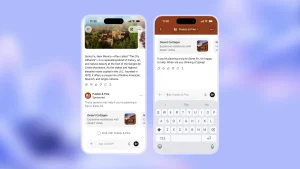
OpenAI’s calling them “Sponsored Recommendations.” And from what we know, they’ll show up at the bottom of ChatGPT’s responses when there’s something relevant to pitch you.
So if you ask “what’s a good keto dinner recipe,” you might see a little sponsored box at the end recommending a specific brand of avocado oil. Clearly labeled. Separate from the actual answer.
That’s the confirmed format. But leaked code from the Android app suggests they’re building out more:
- Search carousels for shopping queries (think product grids)
- Sponsored responses that sit at the top of answers
- Sidebar placements for supplementary info
- And here’s the wild one: interactive ads where you can actually ask the ad follow-up questions
That last one could be huge. Imagine seeing an ad for a CRM tool and being able to ask “does this integrate with Salesforce?” right there in the chat. No landing page. No sales call. Just… answers.
We don’t know when all of this rolls out. But OpenAI’s clearly thinking bigger than “slap a banner at the bottom.”

The Targeting Thing (This Is the Big One)
Alright, lean in. Because this is where ChatGPT ads get genuinely different from everything else you’re running.
With Google, you bid on keywords. Someone types “running shoes,” you show them an ad for running shoes. Simple.
With Meta, you target audiences. People who like fitness pages, visited competitor websites, look like your existing customers. Also pretty straightforward.
With ChatGPT? You’re targeting conversations.
And not just single queries. Entire dialogues. Context. Nuance.
Here’s a concrete example.
Google Ads: You bid on “CRM software”
ChatGPT Ads: You target conversations where someone’s saying “I’m running a 15-person sales team, we’re currently on Hubspot but it’s getting expensive, and I need something that integrates with our existing Slack workflow without requiring everyone to learn a new system”
See the difference? You’re not guessing at intent based on a two-word search. You’re stepping into a conversation where someone has literally explained their exact situation, constraints, and needs.
The targeting potential here is kind of nuts. But—and this is important—it also means your old playbooks won’t work.
You can’t just port your Google Ads strategy over. The keyword-based thinking doesn’t translate. You need to think about conversation types and problem patterns instead.
What This Means Practically
If you’re selling enterprise software, you’re not targeting “enterprise software.” You’re targeting conversations about:
- “Migrating off legacy systems without disrupting operations”
- “Getting buy-in from IT for a new tool”
- “Reducing manual data entry for my operations team”
If you’re selling travel packages, you’re not targeting “vacation deals.” You’re targeting:
- “Planning a 10-day trip to Japan with two kids under 10”
- “Anniversary trip somewhere warm in February, $5k budget”
- “Solo travel recommendations for introverts”
This is going to require a completely different way of thinking about audience strategy. And honestly, most brands aren’t ready for it.
We’ve been mapping out conversation-targeting frameworks for clients. Reach out if you want a head start.
Let’s Talk Money
Here’s what we know about pricing: almost nothing.
OpenAI hasn’t announced CPCs, CPMs, or any other pricing. The platform isn’t even publicly accessible to advertisers yet. Anyone telling you specific numbers is guessing.
That said, here’s what we can reasonably assume:
It’s probably going to be expensive. High-intent conversational targeting with a captive audience of 800 million? That’s premium inventory. Expect to pay more per click than Google Search—at least initially.
But conversion rates might justify it. One analysis of AI search traffic found it converts at 14.2% compared to Google’s 2.8%. That’s a 5x difference. If that holds for ChatGPT ads, paying 2-3x more per click could still deliver better cost-per-acquisition.
Early adopters usually get deals. New ad platforms typically offer lower rates to attract initial advertisers and gather data. If you can get in during the testing phase, you’ll probably pay less than everyone who shows up six months later.
Our Budget Recommendation
We’re telling clients to set aside 5-10% of their paid media budget for testing when ChatGPT ads become available. Not enough to bet the farm, but enough to actually learn something.
The goal for Q1 isn’t ROAS optimization. It’s data gathering. Understanding what conversation types perform. What creative approaches resonate. How attribution works (or doesn’t).
The brands that figure this out early will have a massive advantage when everyone else piles in.
Tracking and Attribution (The Messy Part)
Let’s be real: measurement is going to be a challenge.
ChatGPT ads live inside a conversational interface. You’re not just tracking clicks to a landing page—you might be tracking in-chat actions, multi-turn conversations, questions asked, and who knows what else.
Here’s what we know about how it works:
OpenAI adds tracking parameters to URLs in ads. When someone clicks through and converts on your site, that parameter fires back to connect the dots. They’re also using “enhanced conversion modeling” for situations where direct tracking doesn’t work.
But here’s the catch: OpenAI’s committed to not selling user data. They’re keeping conversations private from advertisers. That’s good for users, but it means you’re not getting the granular behavioral data you’re used to from Meta or Google.
What to Set Up Now
Before ChatGPT ads even launch, make sure you have:
- Server-side tracking configured (cookie-based tracking is increasingly unreliable anyway)
- GA4 events set up properly
- Multi-touch attribution models ready
- A plan for how you’ll evaluate a channel where traditional metrics might not apply
If your measurement infrastructure is shaky, fix it now. Because trying to debug attribution while simultaneously learning a new platform is a nightmare.
How This Compares to Google’s AI Ads
Everyone’s asking: “Should I do ChatGPT ads or wait for Google Gemini?”
Here’s our take: you’ll probably end up doing both, but for different purposes.
Google’s approach is to put ads in AI Overviews (the AI-generated summaries at the top of search results) and eventually in Gemini. They’ve got the advantage of massive scale (2 billion monthly users across AI features) and existing advertiser relationships. But they’re also moving cautiously—Google’s VP of Ads has said there are “no plans” for Gemini app ads, though internal sources suggest otherwise.
ChatGPT’s approach is to go straight to the conversational interface where people are having detailed, high-intent interactions. Smaller scale than Google, but potentially higher quality.
The smart play is probably:
- Use Google for high-volume, transactional intent (people ready to buy now)
- Use ChatGPT for consultative, complex decision-making (people researching thoroughly)
Different moments in the customer journey. Different platforms for each.
What Industries Should Pay Attention
Not every brand should rush into ChatGPT ads. Here’s where we see the biggest opportunity:
High-consideration purchases — Enterprise software, financial services, healthcare, education. Anything where people do serious research before buying.
Complex B2B sales — If your sales cycle involves explaining nuance and handling objections, ChatGPT’s conversational format could be gold.
E-commerce with decision fatigue — Categories where people need help choosing between options. Electronics, home improvement, specialty retail.
Travel — This one’s obvious. ChatGPT’s already driving 18% of purchase influence in travel. People use it to plan trips, compare options, and make decisions.
Where it might not work as well (yet):
- Impulse purchases
- Brand awareness plays with no direct response goal
- Anything heavily regulated that might fall into “sensitive topics”
Getting Your Creative Right
Here’s where a lot of brands are going to screw up: they’ll take their Google Ads copy and drop it into ChatGPT.
That’s a mistake.
ChatGPT ads need to feel like recommendations, not interruptions. You’re entering someone’s conversation. Act like it.
What works:
- “Based on what you’re describing, [product] handles exactly that—here’s how…”
- Specific, helpful, relevant to the actual conversation
- Tone that matches the user’s question (technical for technical queries, casual for casual ones)
What doesn’t work:
- “BEST DEALS! SHOP NOW! LIMITED TIME!”
- Generic value propositions that don’t connect to the conversation
- Anything that feels like it was written for a different channel and copy-pasted
And here’s the thing: OpenAI has hinted that users might be able to ask questions to ads. Which means your ad copy might need to hold up to interrogation. If someone asks “does this really work?” or “what’s the catch?”—what’s your answer?
Start thinking about your ads as the beginning of a conversation, not the end of one.
The AEO Thing (Don’t Skip This)
Before you spend a dollar on ChatGPT ads, you need to care about whether ChatGPT mentions you organically.
This is called Answer Engine Optimization (AEO), and it’s becoming crucial.
Here’s why it matters: if ChatGPT organically recommends your competitor in its answer, and then shows your ad underneath… you’re in trouble. You’re paying to be the afterthought.
The brands that win will be the ones ChatGPT already wants to recommend. Then the ads just amplify what’s already working.
Quick AEO Checklist
- Is your brand mentioned when people ask ChatGPT about your category? Actually test this. Ask ChatGPT “what’s the best [your product category]” and see what comes up.
- Do you have clear, quotable information on your site? AI pulls from content it can easily parse. Specific facts, prices, comparisons, specs.
- Are you mentioned on third-party sites? ChatGPT weighs what multiple sources say. Reddit threads, review sites, industry publications—these matter.
- Is your content fresh? 95% of ChatGPT citations come from content updated in the last 10 months. Old content gets ignored.
If ChatGPT doesn’t know who you are organically, you’re starting from a disadvantage in paid.
We do AEO audits as part of our SEO work. Hit us up if you want to know where you stand. We even have pre-made packages for LLM SEO that you can hire us for right away.
Your Pre-Launch Checklist
ChatGPT ads aren’t live for advertisers yet. But here’s what you should be doing right now:
This week:
- Test your brand’s organic ChatGPT visibility (literally just ask it about your category)
- Audit your positioning—can you explain what you do in one sentence?
- Check that your measurement infrastructure is solid
This month:
- Develop conversation-type targeting hypotheses (what problems do your customers describe?)
- Create recommendation-style ad copy drafts
- Brief your team on conversational advertising concepts
- Set aside test budget (5-10% of paid spend)
Before ads launch:
- Optimize landing pages for conversational traffic
- Build FAQ content that could support interactive ads
- Establish KPIs that make sense for a new, unproven channel
- Have a clear test-and-learn plan
The Timeline
Here’s what we know is happening:
- Now: OpenAI has announced ads, testing starts “in coming weeks”
- Q1 2026: US rollout for free and Go tier users
- 2026: Broader expansion, new formats, potentially self-serve platform
- 2029: OpenAI projects $25 billion in ad revenue (yes, billion with a B)
We don’t have exact dates for when advertisers can buy in. But given the revenue projections, it’s coming fast.
Our Honest Take
Is ChatGPT advertising going to be huge? Probably.
Is it going to replace Google? No. At least not anytime soon.
Is it worth paying attention to? Absolutely.
Here’s how we’re thinking about it: ChatGPT ads represent a genuinely new kind of advertising. Not a better version of search ads. Not a new social platform. Something different—conversational, contextual, potentially interactive in ways we haven’t seen before.
The brands that approach it with curiosity and a willingness to experiment will figure it out. The brands that try to force their existing playbooks onto it will waste money.
We’re excited. Cautiously. And we’re already working with clients to be ready when this thing opens up.
Let’s Figure This Out Together
Look, nobody has all the answers on ChatGPT ads yet. The platform isn’t even live for advertisers. Anyone claiming they’ve “cracked the code” is selling you something.
But we’ve been in digital advertising long enough to know that early movers win. And we’ve been doing the research, building the frameworks, and preparing clients for this moment.
If you want to be ready when ChatGPT ads launch—actually ready, not just “we’ll figure it out” ready—let’s talk.
We’ll dig into your specific situation, assess your AEO readiness, and build a plan for testing this channel intelligently.
No pressure. No hard sell. Just a conversation about whether this makes sense for your brand.
Schedule a call with Wallaroo Media →
Sources
We actually read all of these. The good ones and the bad ones.
- OpenAI’s Official Announcement
- CNBC Coverage
- CNN Business
- The Information’s Revenue Projections
- TechCrunch
- PPC Land Analysis
- Discovered Labs Comparison
- DemandSage Statistics
- Amsive AEO Guide
- Search Engine Journal on ChatGPT Shopping
- AdWeek on Google Gemini
Last updated: January 17, 2026