ChatGPT Is Now Serving Ads: What Marketers Need to Know

ChatGPT Is Now Serving Ads: What Marketers Need to Know
A new era of AI-powered advertising has arrived. Here’s how it could reshape how brands connect with consumers.
Yesterday, OpenAI made waves by officially announcing that advertisements are coming to ChatGPT. After months of speculation and a strategic pause in late 2025, the company is finally opening the doors to what could become one of the most significant new advertising channels of the decade.
Here’s everything your brand needs to know.

What’s Happening
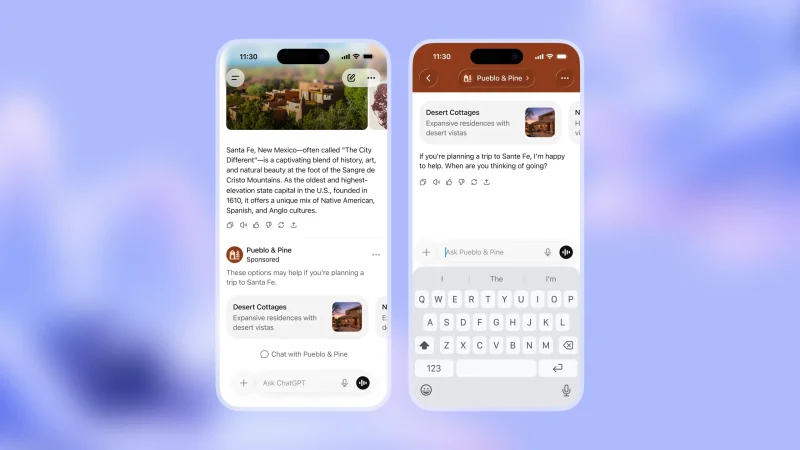
OpenAI will begin testing ads in ChatGPT “in the coming weeks” for logged-in adults in the United States. The company is calling these placements “Sponsored Recommendations”—context-aware suggestions that appear in a distinct box at the bottom of ChatGPT responses.
This isn’t your typical banner ad. When a user asks ChatGPT for a keto-friendly dinner recipe, they might see a sponsored link for a specific brand of avocado oil or a nearby grocery delivery service. The ad is directly relevant to the conversation happening in real-time.
With 700 million weekly users and 2.5 billion daily messages, the scale here is enormous.
Who Will See Ads (And Who Won’t)
OpenAI is being selective about ad placement:
Will see ads:
- Free tier users in the U.S.
- ChatGPT Go subscribers ($8/month tier)
Won’t see ads:
- Plus, Pro, Business, and Enterprise subscribers
- Users under 18
- Conversations involving health, mental health, or political topics
This creates an interesting dynamic. Premium subscribers get an ad-free experience, while the massive free user base becomes the advertising audience.
OpenAI’s Five Principles for Advertising
OpenAI is clearly trying to thread the needle between monetization and user trust. They’ve committed to five guiding principles:
- Answer Independence — Ads will not influence the answers ChatGPT provides
- Conversation Privacy — User data will never be sold to advertisers
- User Choice & Control — Users can disable personalization and clear their data
- Mission Alignment — Ads must align with OpenAI’s broader mission
- Long-Term Value — Prioritizing user experience over short-term revenue
Fidji Simo, OpenAI’s CEO of Applications, emphasized on X: “Ads will not influence the answers ChatGPT gives you.”
Why This Matters for Marketers
1. Intent-Rich Targeting
Unlike traditional search ads where you’re targeting keywords, ChatGPT ads can target conversational intent. A user isn’t just typing “best running shoes”—they’re having a detailed conversation about their training goals, injury history, and budget. The targeting potential is unprecedented.
2. A New Competitive Landscape
Google announced in December 2025 that it plans to bring ads to Gemini in 2026. The AI advertising wars are officially heating up. Brands that figure out this channel early will have a significant first-mover advantage.
3. Different Creative Requirements
Banner ads won’t cut it here. These “Sponsored Recommendations” need to feel native to the conversation. Marketers will need to think about how their products and services solve the specific problems users are discussing—in real time.
4. Premium User Segmentation
The ad-free premium tiers create natural audience segmentation. Free and Go tier users represent a different demographic than those paying $20+/month for Plus or $200/month for Pro.
What Brands Should Do Now
1. Monitor the rollout. OpenAI is testing in the U.S. first. Pay attention to early case studies and performance data as it emerges.
2. Audit your conversational positioning. How do people talk about your product category? What problems are they trying to solve? This will inform your creative strategy.
3. Prepare for context-aware creative. Start thinking about how your brand messaging translates to conversational contexts—not just keywords.
4. Watch the competition. Google’s Gemini ads are coming too. A cross-platform AI advertising strategy may be necessary sooner than you think.
The Bottom Line
ChatGPT advertising represents a fundamental shift in how brands can reach consumers. We’re moving from search intent to conversational intent—and the brands that adapt quickly will benefit most.
At Wallaroo Media, we’re closely tracking this development and helping our clients prepare for the next generation of digital advertising. If you want to discuss what ChatGPT ads could mean for your brand, reach out to our team.
Sources: